Solutions / Wastewater Treatment / EfloMBBR
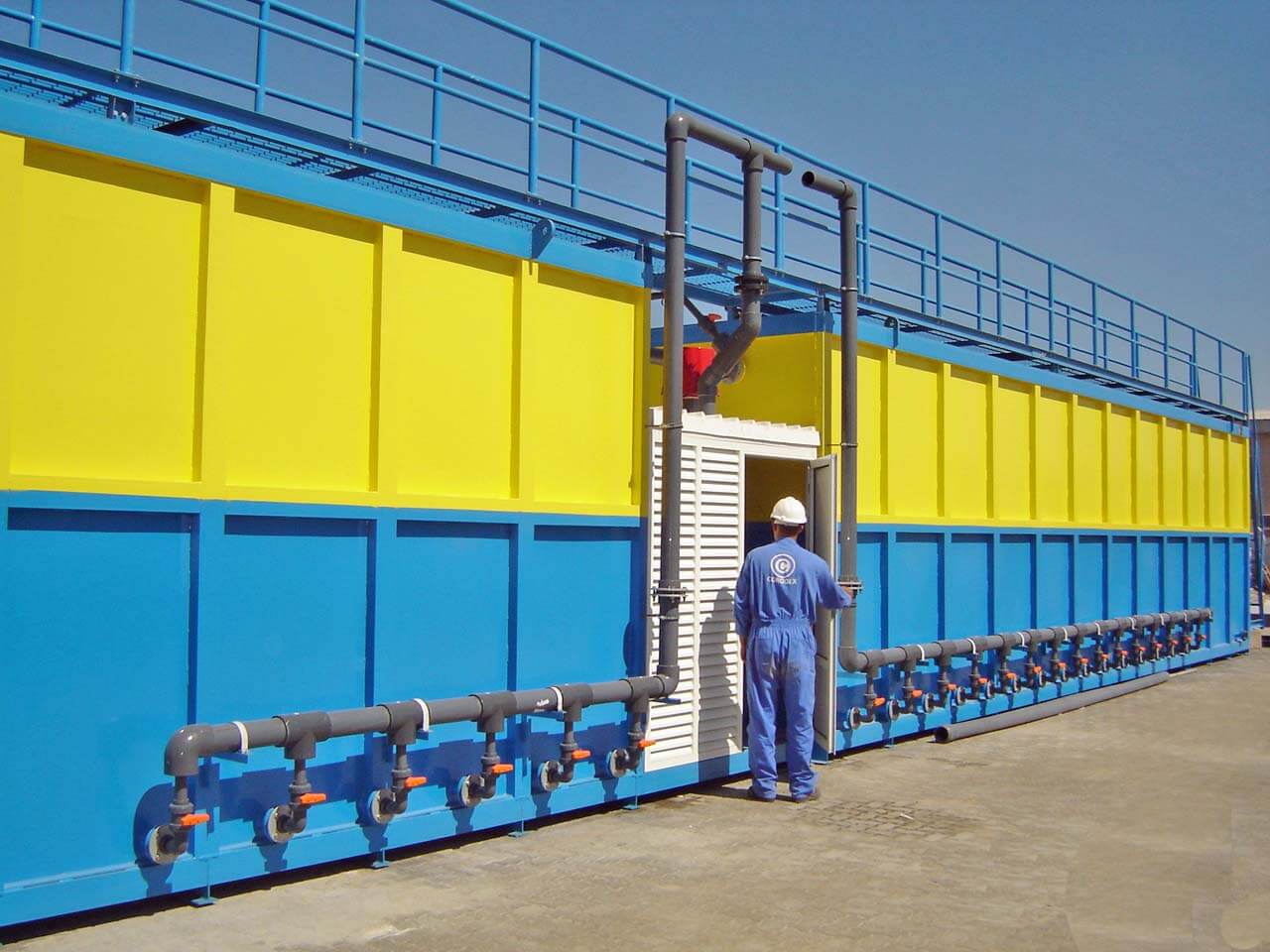
EfloMBBR
Corodex has done extensive research into Moving Bed Bio-Reactors (MBBR) to optimize the process. Essentially, the EFLOMBBR system is a biofilm process. Biofilm processes in general require less space than activated sludge systems because the biomass is more concentrated.
Corodex has conducted extensive research into Moving Bed Biofilm Reactor (MBBR) technology to optimize the treatment process. The EfloMBBR system is a biofilm process that requires less space than conventional activated sludge systems because the biomass is more concentrated.
The EfloMBBR process uses small plastic carrier elements that remain in constant motion throughout the reactor volume to enhance biofilm growth. The high-surface-area media can be used in both Integrated Fixed Film Activated Sludge (IFAS) and Moving Bed Biofilm Reactor (MBBR) configurations. In IFAS mode, the system supports the simultaneous growth of suspended biomass and biofilm.
Corodex offers a fixed-film biological product line, including EfloMBBR™, EfloIFAS™, and EfloHYB™, with a broad range of carrier types to meet the specific needs of different applications.
EfloMBBR™ is a compact, versatile, and operator-friendly technology that supports cost-effective contaminant removal.
EfloIFAS™ is an excellent upgrade solution for activated sludge systems, SBR systems, and extended aeration processes facing increased loads. It is also suitable for municipal sewage treatment plants requiring improved nitrification and reduced load on secondary clarifiers. This allows the capacity of an existing treatment plant to be increased without increasing its footprint.
EfloHYB™ is a variant of the MBBR process designed for industrial applications with high-strength wastewater, variable flows, and shock loads. EfloHYB™ carriers provide a very high protected surface area with controlled biofilm thickness and can act as pretreatment for overloaded industrial wastewater treatment plants.
EfloMBBR offers the following advantages compared to activated sludge systems:
- Higher effective sludge retention time (SRT)
- Tolerance to load fluctuations without operator intervention
- Less sludge production
- Less footprint
- Resilience to toxic shocks